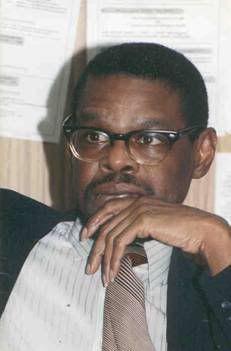
It is an excellent program that pays full tuition for deserving students who attend the nine high schools… Eva Bonilla, Chair HWNT – FW Chapter - evabonilla@charter.net
The Community Scholars application is available online at the following link: http://www.admissions.tcu.edu/communityscholars/.
Please remind your students that by completing the application, the $40 fee will be waived automatically.
Community Scholars Program: Qualified Texas Schools
Dunbar (Fort Worth)
South Hills (Fort Worth)
Polytechnic (Fort Worth)
Trimble Tech (Fort Worth)
Diamond Hill-Jarvis (Fort Worth)
North Side (Fort Worth)
O.D. Wyatt. (Fort Worth)
Lincoln (Dallas)
Sam Houston (Arlington)
Information Source:
Michael J. Marshall
Assistant Director of Admission
Texas Christian University
TCU Box 297013
Fort Worth, TX 76129
817.257.7490
817.257.7268 (fax)
m.marshall@tcu.edu
Wednesday, October 29, 2008


Renaissance Cultural Center Scholarship Program Presents Information Forums
CALLING ALL TARRANT COUNTY HIGH SCHOOL SENIORS & PARENTS
Do you need $$$ for College???? Well, attend the program presented by Citi Financial and Renaissance Cultural Center on Saturday, November 1, 2008, from 9 a.m. until 11 a.m., and start earning and learning about the 2009 RCC Scholarship and the opportunities Citi Financial offers.
REMEMBER: Your attendance will count towards the volunteer hours needed to apply for the 2009 RCC Scholarship.
THIS IS YOUR OPPORTUNITY TO BEGIN THE PROCESS TO EARN ONE OF:
10 to 20 - $2500.00 Renaissance Cultural Center Scholarships that will be awarded to attend the university, college, business or trade school of your choice!
5 - $1000.00 to $2000.00 Ashanti Monique Austin Memorial Scholarships that will be awarded to attend Tarrant County College!
DON’T LET THIS OPPORTUNITY PASS YOU BY – ACT NOW – START EARNING THOSE REQUIRED WORKSHOP HOURS THIS SATURDAY!!!
For additional information or to sign up to attend –
Email: info@renaissanceculturalcenter.org or call
(817) 922-9999.
For the 2009 RCC Scholarship Application Deadline & Criteria,
Schedule of Upcoming Scholarship Workshops visit:
Web Site: www.renaissanceculturalcenter.org
Workshop Location:
National Multicultural Western Heritage Museum
(Formerly National Cowboys of Color Museum)
3400 Mount Vernon Avenue, Ft. Worth, TX 76103
FREE PARKING – FREE ADMISSION – REFRESHMENTS SERVED
OPEN TO 9TH THROUGH 12TH GRADE AND PARENTS
2009 RENAISSANCE CULTURAL CENTER SCHOLARSHIP PROGRAM
INFORMATION FORUM SCHEDULE
(Attendance will count towards required RCC Scholarship application hours.
Open to 9th thru 12th Grade Students & Parents. Free Admission.)
“SO YOU WANT TO GO TO COLLEGE”
CITI FINANCIAL EDUCATION... Saturday, November 1, 2008
Super keys to financial success: banking and accounting skills, budgeting and credit worthiness.
UNDERSTANDING COLLEGE CULTURE PART I & II... Saturday, November 15, 2008
Transition from high school to college – learn new study skills, talk about student lifestyles, balancing schedules and time management skills and tools. Tips to launch your college years: get to know your instructor, degree planning, and college community involvement.
PRESENTATION SKILLS AND DRESSING TO IMPRESS……….Saturday, November 22, 2008
Discuss interviewing skills, business and social settings. Review clothing terminology - business, casual, formal, semi-formal.
UNDERSTANDING COLLEGE CULTURE PART III………………Saturday, December 6, 2008
Choosing the right college and identifying your needs (size, cost, location).
“I KNOW WHERE I AM GOING! GETTING READY FOR COLLEGE SUCCESS”
WRITING SCHOLARSHIP AND THANK YOU LETTERS…………Saturday, January 17, 2009 Learn writing techniques for various topics.
Do you need $$$ for College???? Well, attend the program presented by Citi Financial and Renaissance Cultural Center on Saturday, November 1, 2008, from 9 a.m. until 11 a.m., and start earning and learning about the 2009 RCC Scholarship and the opportunities Citi Financial offers.
REMEMBER: Your attendance will count towards the volunteer hours needed to apply for the 2009 RCC Scholarship.
THIS IS YOUR OPPORTUNITY TO BEGIN THE PROCESS TO EARN ONE OF:
10 to 20 - $2500.00 Renaissance Cultural Center Scholarships that will be awarded to attend the university, college, business or trade school of your choice!
5 - $1000.00 to $2000.00 Ashanti Monique Austin Memorial Scholarships that will be awarded to attend Tarrant County College!
DON’T LET THIS OPPORTUNITY PASS YOU BY – ACT NOW – START EARNING THOSE REQUIRED WORKSHOP HOURS THIS SATURDAY!!!
For additional information or to sign up to attend –
Email: info@renaissanceculturalcenter.org or call
(817) 922-9999.
For the 2009 RCC Scholarship Application Deadline & Criteria,
Schedule of Upcoming Scholarship Workshops visit:
Web Site: www.renaissanceculturalcenter.org
Workshop Location:
National Multicultural Western Heritage Museum
(Formerly National Cowboys of Color Museum)
3400 Mount Vernon Avenue, Ft. Worth, TX 76103
FREE PARKING – FREE ADMISSION – REFRESHMENTS SERVED
OPEN TO 9TH THROUGH 12TH GRADE AND PARENTS
2009 RENAISSANCE CULTURAL CENTER SCHOLARSHIP PROGRAM
INFORMATION FORUM SCHEDULE
(Attendance will count towards required RCC Scholarship application hours.
Open to 9th thru 12th Grade Students & Parents. Free Admission.)
“SO YOU WANT TO GO TO COLLEGE”
CITI FINANCIAL EDUCATION... Saturday, November 1, 2008
Super keys to financial success: banking and accounting skills, budgeting and credit worthiness.
UNDERSTANDING COLLEGE CULTURE PART I & II... Saturday, November 15, 2008
Transition from high school to college – learn new study skills, talk about student lifestyles, balancing schedules and time management skills and tools. Tips to launch your college years: get to know your instructor, degree planning, and college community involvement.
PRESENTATION SKILLS AND DRESSING TO IMPRESS……….Saturday, November 22, 2008
Discuss interviewing skills, business and social settings. Review clothing terminology - business, casual, formal, semi-formal.
UNDERSTANDING COLLEGE CULTURE PART III………………Saturday, December 6, 2008
Choosing the right college and identifying your needs (size, cost, location).
“I KNOW WHERE I AM GOING! GETTING READY FOR COLLEGE SUCCESS”
WRITING SCHOLARSHIP AND THANK YOU LETTERS…………Saturday, January 17, 2009 Learn writing techniques for various topics.
Friday, October 3, 2008
Success Should Build Upon Success
Twenty-five students and four teachers from Nagaoka, Japan visited two Fort Worth ISD middle schools recently, participating in the annual Sister Cities International Ambassador Middle School Program.
The Japanese guests were hosted by students and families of William James Middle School and Daggett Montessori.
The Ambassador Program is a cultural and educational exchange for 8th graders. The students and teachers visit Fort Worth for approximately nine days each September. The goal is to provide an international experience that inspires global understanding, provides an opportunity to share and learn about educational systems, cultural heritage and traditions, and develops new international friendships, while gaining a personal experience of living with a host family.
Eddie Griffin Commentary
As the world becomes more a global community, cultural exchange program such as Fort Worth ISD Ambassador Program opens the door to an international education classroom. What if our children could speak and write Japanese, the kids could become lifelong classmates, through online communications.
We must teach our children new languages and expose them to new cultures.
Remember the commerical on television about the Japanese middle school student and the American middle class student looking directly at each other on opposite screens. The object was to see who would blink first.
The is the international classroom of the future: Online and tele-video vis-a-vis exchanges in Real Time teaching-learning experience.
South Hills High School students who demonstrate extraordinary leadership or academic gains will be the recipients of a PEAK Scorpion Spirit shirt. The students will be allowed to wear these spirit shirts on designated days and will receive special privileges.
This is just one of the innovative programs being launched in the District's PEAK schools. PEAK -Public Educators Accelerating Kids - is a pilot program for 15 FWISD campuses.
The Japanese guests were hosted by students and families of William James Middle School and Daggett Montessori.
The Ambassador Program is a cultural and educational exchange for 8th graders. The students and teachers visit Fort Worth for approximately nine days each September. The goal is to provide an international experience that inspires global understanding, provides an opportunity to share and learn about educational systems, cultural heritage and traditions, and develops new international friendships, while gaining a personal experience of living with a host family.
Eddie Griffin Commentary
As the world becomes more a global community, cultural exchange program such as Fort Worth ISD Ambassador Program opens the door to an international education classroom. What if our children could speak and write Japanese, the kids could become lifelong classmates, through online communications.
We must teach our children new languages and expose them to new cultures.
Remember the commerical on television about the Japanese middle school student and the American middle class student looking directly at each other on opposite screens. The object was to see who would blink first.
The is the international classroom of the future: Online and tele-video vis-a-vis exchanges in Real Time teaching-learning experience.
South Hills High School students who demonstrate extraordinary leadership or academic gains will be the recipients of a PEAK Scorpion Spirit shirt. The students will be allowed to wear these spirit shirts on designated days and will receive special privileges.
This is just one of the innovative programs being launched in the District's PEAK schools. PEAK -Public Educators Accelerating Kids - is a pilot program for 15 FWISD campuses.
Friday, August 22, 2008
Mapping Empirical Reality to Solve Social Problems
Written for Educators
By Eddie Griffin
Friday, August 22, 2008
Here is a page from the Black Panther Old School: Teaching problem-solving techniques by “mapping” reality, interpolated from Alfred Korzybski’s “Science and Sanity”.
Probably, the simplest way to explain it is like this scenario:
In our minds, we map a mental picture of the world we engage in. When the map does not accurately depict empirical reality, we misjudge situations and make mistakes in our engagement.
A classic example of this phenomenon would be a man sitting in a car at a stop sign, waiting for the traffic to give him a break, so he can traverse to the other side.
An accident at the intersection tells us that a misjudgment has been made on the part of the man sitting at the stop sign. The “map” inside his head was simply incorrect. Therefore, he proceeded with a distorted and false mental picture of the true external situation.
He either miscalculated the speed of the oncoming car, or miscalculated its distance. Simple mathematics inside the head would signal when it is “safe” for the man to make a dash. Even if the man fails to understand the physics of distance and speed, he should be able to judge, intuitively, if it is “safe” to cross.
What is missing in the mental equation is the “risk” factor. What is “safe”?
Here, a whole number of subjective issues come into play, the most egregious of which is the driver who did not see the other car coming.
How can a person miss seeing another vehicle barreling down the road? It is inconceivable but common. Something in the composition of the driver’s mental picture did not include the other car. Simply put, the other car was obliterated by “mental blinders”, commonly put on by the attitude of “seeing only what I want to see”. Therefore, the driver only saw that the road as “his”, when it actually was not.
The same principle holds true when we map out a social problem and try to solve it. An incorrect mental picture will produce a false answer.
Being wrong is not as big a crime as a terminal mistake. It’s one thing to come up with a false answer, but another when comes the attitude of forcing a round peg into a square hole. The War in Iraq is a classic example of trying to force fit a round peg into the square hole conceived by politicians with a faulty mental map of the world.
It is of ultimate importance that our subjective mental map of reality matches the objective, empirical world. For then, with correct information, accurate data, a keener sense of casual relations, and intelligent mental diagnostic and analytical tools, we can make better decisions in our problem-solving.
By Eddie Griffin
Friday, August 22, 2008
Here is a page from the Black Panther Old School: Teaching problem-solving techniques by “mapping” reality, interpolated from Alfred Korzybski’s “Science and Sanity”.
Probably, the simplest way to explain it is like this scenario:
In our minds, we map a mental picture of the world we engage in. When the map does not accurately depict empirical reality, we misjudge situations and make mistakes in our engagement.
A classic example of this phenomenon would be a man sitting in a car at a stop sign, waiting for the traffic to give him a break, so he can traverse to the other side.
An accident at the intersection tells us that a misjudgment has been made on the part of the man sitting at the stop sign. The “map” inside his head was simply incorrect. Therefore, he proceeded with a distorted and false mental picture of the true external situation.
He either miscalculated the speed of the oncoming car, or miscalculated its distance. Simple mathematics inside the head would signal when it is “safe” for the man to make a dash. Even if the man fails to understand the physics of distance and speed, he should be able to judge, intuitively, if it is “safe” to cross.
What is missing in the mental equation is the “risk” factor. What is “safe”?
Here, a whole number of subjective issues come into play, the most egregious of which is the driver who did not see the other car coming.
How can a person miss seeing another vehicle barreling down the road? It is inconceivable but common. Something in the composition of the driver’s mental picture did not include the other car. Simply put, the other car was obliterated by “mental blinders”, commonly put on by the attitude of “seeing only what I want to see”. Therefore, the driver only saw that the road as “his”, when it actually was not.
The same principle holds true when we map out a social problem and try to solve it. An incorrect mental picture will produce a false answer.
Being wrong is not as big a crime as a terminal mistake. It’s one thing to come up with a false answer, but another when comes the attitude of forcing a round peg into a square hole. The War in Iraq is a classic example of trying to force fit a round peg into the square hole conceived by politicians with a faulty mental map of the world.
It is of ultimate importance that our subjective mental map of reality matches the objective, empirical world. For then, with correct information, accurate data, a keener sense of casual relations, and intelligent mental diagnostic and analytical tools, we can make better decisions in our problem-solving.
Tuesday, August 19, 2008
First Day of School: What Next?
By Eddie Griffin
Tuesday, August 19, 2008
Nearly 50 ministers on Monday embraced plans for students to boycott at least the first day of Chicago Public Schools classes… Also Monday, another group of clergy urged a different tactic on Chicago's first school day. Organizers of the 5th annual Million Father March asked fathers to escort children to class on Sept. 2. (“A school boycott, or not?” Robert Mitchum and Ray Long, Chicago Tribune)
Can both fresh water and salt water flow from the same spring? (James 3:11)
Wouldn’t you just know it? The Chicago Tribune discovered this apparent contradiction arising from the African-American community.
On the one hand, the Million Father March seeks to recruit “500,000 men in 300 cities to take their children to school this first fall school day”. While on the other hand, Chicago State Senator James Meeks “has issued a call for all school kids in Chicago's poorest districts to boycott the first day at their assigned school and instead head to resource-rich predominately white schools and attempt to register there.”
Before we conclude the right hand don’t know what the left hand is doing, let’s examine what these two different strategies entail.
The Million Father March is an annual national event originally designed to get fathers more involved with their children’s education. Historically, fathers have been the absent factor in a child's education. Recent experience has shown that children accompanied to school on the first day with their fathers exhibit more pride and are less fearful.
The boycotters of the Chicago school system have one primary local focus: the disparity in education funding. By skipping registration at the home school and seeking to register in the “resource-rich predominately white schools”, students in poor schools might gain a contrasting view of what the best schools offer, as compared to their own.
But how can both strategies work in the same city at the same time, with the million father back-to-school movement, on the one side, and a boycott on the other?
It is impossible for both events to occur without one undermining the other... UNLESS.
Note that both plans anticipate that all students attend school on the first day, whether their home school or whether to try and register at the better school. In either case, the father should accompany their child, especially those who try to get into a new school where they might not be particularly welcomed.
Whether the black community can come together with a merged strategy or whether each movement will pursue its own agenda will be an interesting dilemma to see played out.
Tuesday, August 19, 2008
Nearly 50 ministers on Monday embraced plans for students to boycott at least the first day of Chicago Public Schools classes… Also Monday, another group of clergy urged a different tactic on Chicago's first school day. Organizers of the 5th annual Million Father March asked fathers to escort children to class on Sept. 2. (“A school boycott, or not?” Robert Mitchum and Ray Long, Chicago Tribune)
Can both fresh water and salt water flow from the same spring? (James 3:11)
Wouldn’t you just know it? The Chicago Tribune discovered this apparent contradiction arising from the African-American community.
On the one hand, the Million Father March seeks to recruit “500,000 men in 300 cities to take their children to school this first fall school day”. While on the other hand, Chicago State Senator James Meeks “has issued a call for all school kids in Chicago's poorest districts to boycott the first day at their assigned school and instead head to resource-rich predominately white schools and attempt to register there.”
Before we conclude the right hand don’t know what the left hand is doing, let’s examine what these two different strategies entail.
The Million Father March is an annual national event originally designed to get fathers more involved with their children’s education. Historically, fathers have been the absent factor in a child's education. Recent experience has shown that children accompanied to school on the first day with their fathers exhibit more pride and are less fearful.
The boycotters of the Chicago school system have one primary local focus: the disparity in education funding. By skipping registration at the home school and seeking to register in the “resource-rich predominately white schools”, students in poor schools might gain a contrasting view of what the best schools offer, as compared to their own.
But how can both strategies work in the same city at the same time, with the million father back-to-school movement, on the one side, and a boycott on the other?
It is impossible for both events to occur without one undermining the other... UNLESS.
Note that both plans anticipate that all students attend school on the first day, whether their home school or whether to try and register at the better school. In either case, the father should accompany their child, especially those who try to get into a new school where they might not be particularly welcomed.
Whether the black community can come together with a merged strategy or whether each movement will pursue its own agenda will be an interesting dilemma to see played out.
Monday, August 18, 2008
A TEEN FORUM: Let’s Talk
“Let’s Talk” aims to decrease infant mortality rates by providing adolescent girls with formal instruction on
• Prevention of teen pregnancy
• Prevention of STDs
• Self esteem and stress management
• Proper nutrition and fitness
• General Health Promotion
For Girls Ages 13-17
Saturday, September 20, 2008
8:00 am – 4:00 pm
University of North Texas Health Science Center
3500 Camp Bowie Boulevard
Fort Worth, Texas
Limited seating, call or email for registration
Phone: (817) 457-3911
Fax: (817) 457-9556
E-mail: goenter@abchrist.org
Sponsored by:
A B Christian Learning Center; Center for Community Health, UNT Health Science Center, Fort Worth Independent School District, Fort Worth Public Health, Susan G. Komen FOR THE CURE Tarrant County, Texas Center for Health Disparities, Fort Worth Women’s Health Initiative
Loretta Burns
Executive Director
AB Christian Learning Center
5009 Brentwood Stair #101
Fort Worth, TX 76112
(817) 457-3911
lburns@abchrist.org
• Prevention of teen pregnancy
• Prevention of STDs
• Self esteem and stress management
• Proper nutrition and fitness
• General Health Promotion
For Girls Ages 13-17
Saturday, September 20, 2008
8:00 am – 4:00 pm
University of North Texas Health Science Center
3500 Camp Bowie Boulevard
Fort Worth, Texas
Limited seating, call or email for registration
Phone: (817) 457-3911
Fax: (817) 457-9556
E-mail: goenter@abchrist.org
Sponsored by:
A B Christian Learning Center; Center for Community Health, UNT Health Science Center, Fort Worth Independent School District, Fort Worth Public Health, Susan G. Komen FOR THE CURE Tarrant County, Texas Center for Health Disparities, Fort Worth Women’s Health Initiative
Loretta Burns
Executive Director
AB Christian Learning Center
5009 Brentwood Stair #101
Fort Worth, TX 76112
(817) 457-3911
lburns@abchrist.org
Thursday, August 14, 2008
Texas Loses Track of Black Student Drop-Outs
By Eddie Griffin
The annual dropout rates for African American students in Texas, already higher than dropout rates for white and Hispanic students, might be even higher than previously reported, according to a Texas Education Agency report released last week.
(For the full story, read “Study: Texas schools more likely to lose track of African American students” by Molly Bloom, Austin-American Statesman)
Linda Roska, director of the Texas Education Agency's division of accountability research and a co-author of the report, said she couldn't say why the gap exists.
Eddie Griffin Commentary:
When the TEA reports that African-American students are falling through the cracks of the educational system and the Division of Accountability cannot explain why these students do not show up on the drop-out statistics, something is terribly wrong with the meaning of accountability.
Did this information come as a new revelation to the Texas Education Agency? If so, how long has this trend been going on? And, how many black students have we already lost, without any accounting?
What could be wrong besides racism?
First is the resistance of school administrators to count a student as a “drop-out”. That would signify the public school system had failed that student. And, the Fort Worth ISD, as well as other school districts, would rather look the other way than concede failure, than admit that a student is lost.
The second problem is the confusing methodology used to calculate the drop-out rate. School administrations try to keep students on the books as long as possible. The school is funded on the basis of daily attendance per student. The high drop-out rate cuts into state funding allocations.
These are two possible incentives for underreporting the drop-out rate of African-American children.
If the Texas Education Agency cannot explain this “mysterious” mass disappearance, it becomes all the more apparent that community leaders must intervene and seize control of the institution. It is obvious that the public school system failed these students who disappear into thin air.
That’s our baby
The problem could be in the tracking system. I have been a long advocate of a clock-in/clock-out system, where the unit of measurement for the drop-out would correspond with loss of productivity time, i.e. percentage of hours lost in the classroom.
Not only does this system give real-time attendance accounting, but an overview of the percentage of time spent in the classroom. On the other hand, attendance does not necessarily translate into quality education time. The quality of classroom education should be measured by academic achievement, whether by an end-of-course assessment or the standardized TAKS test.
Quantity versus Quality in Education
A student with 50% class time would be considered a “drop-out” in anybody’s book. But if the student has 90% high academic rating, he or she is not considered a lost cause. Therefore, there has to be a combined assessment of quantity and quality.
There should be triggers when productivity or class participation time decreases. There should be benchmarks when academic achievement rises to either new heights or falls to a new low.
This model is simple, comprehensible, and efficient. But it seems, however, that the public school system continues to build upon an antiquated mass production model, with an ever-increasing and expanding bureaucracy. For example, when I look at the number of employees in the Austin accountability office, and compare it with this sad-looking data, it signifies, to me, that the overhead is not worth the results.
Are you satisfied with Linda Roska answer above? If not, contact:
The Texas Education Agency
1701 N. Congress Avenue
Austin, Texas, 78701
(512) 463-9734
Linda Roska, Accountability Research (512) 475-3523
The annual dropout rates for African American students in Texas, already higher than dropout rates for white and Hispanic students, might be even higher than previously reported, according to a Texas Education Agency report released last week.
(For the full story, read “Study: Texas schools more likely to lose track of African American students” by Molly Bloom, Austin-American Statesman)
Linda Roska, director of the Texas Education Agency's division of accountability research and a co-author of the report, said she couldn't say why the gap exists.
Eddie Griffin Commentary:
When the TEA reports that African-American students are falling through the cracks of the educational system and the Division of Accountability cannot explain why these students do not show up on the drop-out statistics, something is terribly wrong with the meaning of accountability.
Did this information come as a new revelation to the Texas Education Agency? If so, how long has this trend been going on? And, how many black students have we already lost, without any accounting?
What could be wrong besides racism?
First is the resistance of school administrators to count a student as a “drop-out”. That would signify the public school system had failed that student. And, the Fort Worth ISD, as well as other school districts, would rather look the other way than concede failure, than admit that a student is lost.
The second problem is the confusing methodology used to calculate the drop-out rate. School administrations try to keep students on the books as long as possible. The school is funded on the basis of daily attendance per student. The high drop-out rate cuts into state funding allocations.
These are two possible incentives for underreporting the drop-out rate of African-American children.
If the Texas Education Agency cannot explain this “mysterious” mass disappearance, it becomes all the more apparent that community leaders must intervene and seize control of the institution. It is obvious that the public school system failed these students who disappear into thin air.
That’s our baby
The problem could be in the tracking system. I have been a long advocate of a clock-in/clock-out system, where the unit of measurement for the drop-out would correspond with loss of productivity time, i.e. percentage of hours lost in the classroom.
Not only does this system give real-time attendance accounting, but an overview of the percentage of time spent in the classroom. On the other hand, attendance does not necessarily translate into quality education time. The quality of classroom education should be measured by academic achievement, whether by an end-of-course assessment or the standardized TAKS test.
Quantity versus Quality in Education
A student with 50% class time would be considered a “drop-out” in anybody’s book. But if the student has 90% high academic rating, he or she is not considered a lost cause. Therefore, there has to be a combined assessment of quantity and quality.
There should be triggers when productivity or class participation time decreases. There should be benchmarks when academic achievement rises to either new heights or falls to a new low.
This model is simple, comprehensible, and efficient. But it seems, however, that the public school system continues to build upon an antiquated mass production model, with an ever-increasing and expanding bureaucracy. For example, when I look at the number of employees in the Austin accountability office, and compare it with this sad-looking data, it signifies, to me, that the overhead is not worth the results.
Are you satisfied with Linda Roska answer above? If not, contact:
The Texas Education Agency
1701 N. Congress Avenue
Austin, Texas, 78701
(512) 463-9734
Linda Roska, Accountability Research (512) 475-3523
Subscribe to:
Posts (Atom)