The Law of Declining Returns
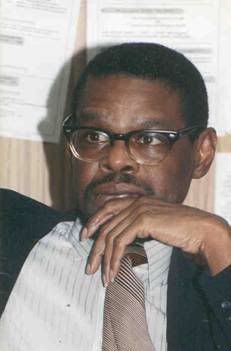
By Eddie Griffin
The great educator, Mrs. Hazel Harvey Peace, as she was approach the centenary milestone, described her production as “the law of declining return”. Her quip took me aback to something I had learned while studying economics. What she was essentially saying to me was that the older she got, the less she was able to do.
But then, I see the same principal at work among school teachers today. Not so much that they produce less the older they get, rather the more and harder they work the less productive the outcome.
These are two examples of the economic law of declining returns. The first, that of Mrs. Peace’s, derives from the manufacturing model of production. The second derives from a defective price model.
When a manufacturer puts a new machine into operation, theoretically the machine produces perfect parts. But gradually, as the machine wears out and becomes depreciated, it begins to produce less perfect parts and more and more scrap. At some point, the machine should be repaired, overhauled, and eventually replaced. Manufacturers who ignore this principal wind up producing their products at a higher and higher cost, until the manufacturing process is no longer profitable and the business no long sustainable.
The second example follows along the lines of a popular Tex-Mex restaurant that annually increased its customer base and sales. The strength of its cash flow allowed it to increase its credit line and expand its business to new locations. But despite increased sales, the company was losing money and had no idea as to why. An analysis showed that it was losing one-to-two cents on each sale, and the increase in sales was only aggregating the total losses.
Teachers are realizing that public schools are in a downward spiral. Academic achievement is on the decline, the dropout rate on the increase, and classroom management is growing less controllable. The solution, they perceive, is to do more, put more time in preparation, work longer hours, give more and more individual attention to each student, use more supplemental materials, and give them homework assignment.
These things they have been doing for years. But this is a case where more produces less. So, what is the problem?
To solve the problem of declining return in the first example, the business owner has to realize at what point the machine is no longer producing profitable products, at what point it needs repairs and at what point even repairs are no long viable and what the long term cost of replacement would be and could the company invest in a new machine before running out of liquidity.
To solve the problem of declining return for Poncho Restaurant chain, it simply meant raising prices on its menu, and to keep raising the prices proportionately as the cost of operation rose.
So what then about the public school system?
Our education system has evolved from the Victorian age to the mass production age to the current digital age. However, our mode of delivery has remained largely the same, and thus the classroom has been manned by the same type of school teacher, with the same type of educational background. Where once education was only for the elite, the mass production model was pyramidal, allowing only a select few to reach the top of the pyramid, while others drop out along the way, with the latter finding mediocre jobs and positions on the lower part of the food chain.
Yesterday’s teachers are not equipped for the digital age. Once they receive their degrees and teaching certificates, they pass on yesterday’s knowledge, which they previously acquired, to the next generation of student learners. Therefore, the pool of knowledge becomes stagnate over time, and antiquated in the long run.
When new technology is introduced into the class, old school teachers are faced with a new learning curve to climb. And, like those on the pyramid in the generation before them, they find themselves sliding. More classroom experience is not necessarily a contemporary asset, but rather a liability like worn out cogs in the machine or old prices fixed against new operations.
We need a new type of teacher, one that is technologically savvy, continues to learn, engages the student, and innovate. Michelle Rhee is right.
Thursday, July 21, 2011


Tuesday, June 14, 2011
Beyond the Crisis in Education: Part 1
By Eddie Griffin
Having been a volunteer with the school system for a number of years, I always find myself returning to the same point: What is wrong with our school system? It makes no difference that we have answered the question over and over again, we somehow seem never to get past asking to actually implementing solutions.
In order to break this endless cycle of defining and redefining the problem, we need to break the paradigm of cyclical thinking and jump straight to where we need to be and how education can get us there.
There are three relative benchmarks: (1) The Crisis Point, i.e. the point of failure and dropping out of school; (2) The Minimum Achievement, i.e. reaching the graduation finish line; and (3) The Ultimate Goal, i.e. catching up with Finland, the most educated country in the world.
If it takes all our time, energy, and effort to get our school children to reach the finish line, then it would take an overkill strategy to get them beyond. In Texas, we are consumed by TAKS state testing. In years to come, the standard will be End-of-Course assessment. But in either case, when the academic standards are low, global achievement will continue to decline, relative to the more advanced nations.
This is why it is necessary to look beyond our borders to see why countries like Finland, Japan, and Canada are leaving the United States behind.
The first thing to note about Finland is its commitment to and great appreciation for education. Once primarily an agricultural society, it focused upon becoming a high tech industrial society. To achieve this goal in one generation, it set a tough national curriculum standard and required all teachers have a Masters degree, and drew from the top 10% of college students to teach in the classroom.
There are three teachers per classroom, and many students stay with the same teachers over a number of years. The average student speaks four different languages, including English. And, the dropout rate is only 2%. Per capita cost is about $3,000 less annually than the cost per student in the United States.
See: Education Finland on NBC Nightly News
Thursday, May 26, 2011
Sue Huffman: Fort Worth School Superintendent, January-June 1882

Tuesday, November 2, 2010
IDREAM Summit: An Eye-Opening Experience
By Eddie Griffin
Tuesday, November 02, 2010
A young school girl sat beside her grandmother and watched intently as my 10-year old grandson manipulated a wave pattern on the screen before an audience. She was about the same age.
I had promised to present a virtual classroom in Science and Math at the October 31, 2010 IDREAM, ILEARN, IWIN Summit in Fort Worth.
Edwin Russell Jr., my grandson, was dying to assist me. He is a fifth grader attending my old alma mater, I.M. Terrel, and some of his school mates were in attendance; unfortunately, though not in his session.
For practice, I had taught him one exercise: How to manipulate the color waves in a light spectrum beamed upon a molecule. When the wave pattern coincided with the graph, the molecule would explode:
KABOOM!
The young girl’s eyes lit up with a starry twinkle, and a toothy grin popped up on her face. She almost leapt out of her chair.
I wondered: Had I done the experiment, no doubt she would have shown lesser interest. After all, a crusty old professor demonstrating in front of a classroom is nothing compared to someone her own age. It's a peer-to-peer motivational phenomenon. That was why I allowed my grandson to do the demo.
Little Ed had boasted like a ham promoting a circus act. To everyone he met that day, including Superintendent Dr. Melody Johnson, that he would “split a molecule with light waves”. That’s how confident he was.
And, when it actually happened in the classroom, the little girl watching, along with her grandmother, literally jumped with excitement. She wanted to try it for herself. So, I gave her the stage, with grandmother and others watching on.
“Come on, baby, you are at 80%”, her grandmother cheered. “You’re at 90%”.
But not so fast, ladies and gentlemen. This was not a game, but a simulation of an actual experiment conducted at the University of Colorado at Boulder. Before this child could perform this operation, she had to learn some other things in the demonstration, stuff for which she had little or no interest and stuff over her head, like Algebra, Geometry, and Trigonometry.
She had to learn how to pick up subatomic particles and build an atom, first a Hydrogen atom; and then by adding colored balls representing protons, neutrons, and electrons, go up the Chemistry periodic chart, and how to read the new atom's mass.
Here the boy deviated from instruction and created an atomic cloud. Losing his focus, and venturing out into curious territory, just seems to come natural to a Whiz Kid, but a little frustrating for grandpa.
But from an instructor's perspective, I missed nothing, in terms of audience facial expressions, body language, and every questions, both from parents and child. This is what dictated the sequence of my presentation. With the arsenal of math and science tools, I was prepared for any age group, and prepared to move on where interest was lacking.
“What is Velocity?” the little girl asked, as we demonstrated balls of different masses colliding together. Her grandmother was there to explain that is was “speed”, and the simulation program allowed me to show the Velocity vector. It reminded me of a question asked by my grandson the weekend before: “What is a Plane?” It was an indication to me that something was soaking in.
It was fast-paced and inundating. It was not meant to be grasped all at once. The object here was, not mastery of a particular subject matter, but rather exposing kids to the next horizon in math and science, and provide parents with free online resources that they could visit over and over again.
We even had time to break for a Moby and Tim cartoon: How to make a 3-D and 2-D cartoon. The little girl was familiar with the characters, Moby and Tom, and the educational animations.
We visited the Science Lab simulations and produced electricity that lit up a light bulb. It was the Faraday waterwheel demonstration, where water pouring over a waterwheel spun a magnet that generated electrical energy and cause the bulb to light up.
Besides learning how to manipulate objects and waves, the child had to have an intuitive understanding of Graphs. Electricity produced a wave pattern, similar to Trigonometric sine and cosine wave. Using the Fourier Wave experiment, we created periodic waves and listened to the sound of wave packets, which were similar to adjusting the bass and treble on the car radio. Therefore, adjusting light waves was like adjust radio waves, and by tweaking light waves in a spectrum directed into a molecule, at the subatomic (nano) level, the student could cause the molecule to explode.
The grandmother who, at first, came through the door at the end of first session, came in asking, “What is all this wave stuff?” Now, here she was, cheering on her granddaughter inched up to 91%, 92%, 93% in coinciding the wave graph. “Come on, baby, you’re almost there.”
Then: KABOOM!
The little girl did it. She had successfully split the molecule, the same as my grandson. Neither understood that this was Quantum Mechanics, the door to molecular engineering.
And, I would be vain to think that I thought these kids Algebra, Geometry, Trigonometry, and Physics, all in one setting. But each child was exposed to new concepts in math and science that will some day come back to them in higher grades. And, even if they cannot remember the math and science involved, they will surely remember their conquest at the console, and not be afraid to tackle these subjects in the future.
Tuesday, September 21, 2010
Fort Worth Winner among 100 Best Communities for Young People
BREAKING NEWS: Fort Worth, One of the 100 Best Communities for Young People
National Ceremony: Tuesday, September 21, 2010
America’s Promise, ING and Twilight’s Kellan Lutz
Celebrate the 100 Best Communities for Young People
Location: 15th Street NW and Constitution Ave NW
(near the Washington Monument)
Date: Tuesday, September 21, 2010
Time: 10:30 a.m.
About the competition:
The 100 Best Communities for Young People, presented by ING, recognizes and celebrates community-wide efforts to improve the well-being of youth and end the nation’s dropout crisis. The communities represent large cities and suburbs, counties and rural towns. Winning efforts are as varied as local needs, imaginations and willingness to work together.
This year, more than 350 communities in all 50 states and Washington, D.C., were nominated for the competition. The winners come from 37 states and 30 are first-time recipients of the honor. They were chosen by a distinguished panel of judges that included some of the nation’s most well-known civic, business and nonprofit leaders.
Source: http://15in5.americaspromise.org/Default.aspx
“The 100 Best Communities for Young People are taking bold and effective steps to help their youth graduate and lead healthy, productive lives,” said Alma J. Powell, Chair, America’s Promise Alliance. “Each community has proven that they are developing programs and implementing initiatives to provide young people with the essential resources they need to graduate from high school and succeed in college and a 21st century career.”
The 2010 winners will be highlighted at a ceremony in front of the Washington Monument on the National Mall in Washington, DC, with Alma Powell, Alliance President and CEO Marguerite Kondracke, and ING Foundation President Rhonda Mims.
Fort Worth, Texas
http://15in5.americaspromise.org/Our-Work/Community-Action/100-Best-Communities/2010-Winners/Fort-Worth-TX.aspx
First-time winner Fort Worth is committed to creating a child-friendly and college-bound culture by investigating the problems surrounding local dropout issues, researching and identifying strategies, implementing the solutions and evaluating the effectiveness of those efforts. The Mayor and City Council have budgeted $13.6 million to provide young people with access to programs and collaborate with a number of local, state and national entities to strengthen the city’s offerings.
The city’s many initiatives designed to improve the wellbeing of youth include the Early Childhood Matters Initiative. Through Early Childhood Resource Centers, families learn how to develop their children's social, emotional and pre-literacy skills so that they are successful when entering kindergarten.
The LeaderKids Fort Worth is a program for middle school students ages 11-14 as a collaborative effort with existing organizations and resources, including the Fort Worth Independent School District, YMCA, Because We Care and Tarrant County Youth Collaboration and more. The program introduces students to the City of Fort Worth in two ways: career presentations allow them to visualize personal achievement as adults, and volunteer opportunities allow them to improve the community in which they live now.
Another collaborative initiative that seeks to encourage teens to return to school and graduate is Prevail to Graduation. This joint effort among the City of Fort Worth, the Fort Worth Independent School District, the Fort Worth Chambers of Commerce and others involves a Stay-in School Walk to contact students by phone and home visit to re-enroll in fall classes.
Community Action Teams are composed of eight individual teams: business, faith, government and social service communities along with parents, students and educators. CATs are charged with enacting recommendations, primarily with those outlined in Project Prevail, the FWISD’s comprehensive school completion plan.
The Fort Worth community is also dedicated to securing the afterschool lives of its youth. Eighty-five different school sites, seven Boys and Girls Clubs and the City of Fort Worth’s 19 community centers provide outlets for students. But to alleviate the growing cost of running these programs and provide alternatives, the Fort Worth After School Program was launched. The funds for this program resulted from the Crime Control and Prevention District Tax which was created to provide additional funds for the Fort Worth Police Department for tactical weapons, vehicles and crime prevention. The afterschool program works to improve student achievement, reduce the drop-out rate and assist in the reduction of juvenile crime.
The Fort Worth community supports a number of GO Center projects through its educational and community partnerships. A GO Center is a college and career information, center typically located in high schools, that focuses on creating a school-wide college-going culture and promotes college awareness and accessibility. Ft. Worth was among the first regions in the state to expand this model in order to make GO Centers available in faith and community based locations, thus bringing information about college and financial aid assistance directly to the neighborhoods.
Friday, June 11, 2010
The Kid with the Bloody Nose
By Eddie Griffin
Friday, June 11, 2010
The 10-year old kid with the bloody nose is my grandson Little Ed. In the waning days of the school year, a big boy pushes him to the ground, face first. Yet, he smiles with pride as he explains how it happened.
He took a pack of cigarettes from his friend and crushed it. The bigger boy who was trying to entice them to smoke took offense and pushed Little Ed down. That was the extent of the damage.
This is the same tough little kid, who has had a ton of medical problems. He spent his entire summer last year undergoing radiation treatment for colon cancer. Before that, his retina had to be detached and realigned in the socket in order for him not to lose sight in one eye. After all this, he gets pushed off a trampoline, lands face first with his bottom teeth protruding through his lower lip. This injury required seven stitches to mend.
This is the same kid, when I asked how he was going to avoid becoming an alcoholic or drug addict, replied that he was going to be a Christian. I guess that he suppose a Christian is to take cigarettes from his friend, in order to save his life. Whatever his 10-year old thinking, he felt good about himself and what he had done.
It was time for grandpa to teach two lessons: (1) How to choose friends; and (2) How to avoid trouble. These were the same lessons taught to his father, Big Ed.
Choosing Friends
Before choosing a friend, watch them closely. Give them six months to prove themselves. Once you embrace and befriend a person, you inherit their problems.
I made friends with a young man named Hondo. His name literally meant War. He stood about 5’5” and was at war with the world. His enemies became my enemies, and he had many.
Avoiding Trouble
Never go to where trouble exists. If there is a fight on campus, go in the opposite direction. And if trouble must come, let it come to you, not you to it. That way, you can see it from afar, and will have already decided what you will do.
-grandpa Eddie Griffin
Thursday, April 15, 2010
Understanding Our Relative Position in the Time-Space Matrix
By Eddie Griffin
Where we come from, where we are, and where we are headed is the subject of this discussion, because it is evident that we do not all have the same point of origin, we share a mutual presence, and we are all headed towards the future, but in separate directions.
Where are you going?
The reason I ask is because, where there is no vision, the people perish. A leader cannot lead unless he can clearly articulate what he sees for the future. Dr. Martin Luther King, Jr. had a dream, and we shared in the optimism of the times.
There will always be a dream. They see it through rose colored glasses and forget about the trials in reaching it. And, each new generation comes into the picture, wearing a new pair of rose colored glasses. They come into the theater in the middle of the picture, while the graying generation is on its way out.
As the old gives way to the new, the newborn takes the baton in order to continue in the race. But if the baton is dropped, the race is lost.
We must look at the picture, from beginning to end, realizing the relativity of our position in the time-space matrix.
We must look at the particular, then look at the general, and back to the particular, in order to see where a particular situation fits into the big picture, and how it affects the broader situation. We must proceed from the micro to the macro, back to the micro, in order to diagnose the overall situation, by understanding its smaller component parts.
In looking at Planet Earth 2010, relative to our position, we see a downward spiral in human intelligence. The species is relegated to only seeing and living for today, not knowing from whence they come, nor where they are going. This mindset is prone to error. The analogy is like trying to hit a moving target in time T (future) by aiming at time T (now). These young men and women fall short of their expectation: Their thinking is static, not dynamic.
Subscribe to:
Posts (Atom)